
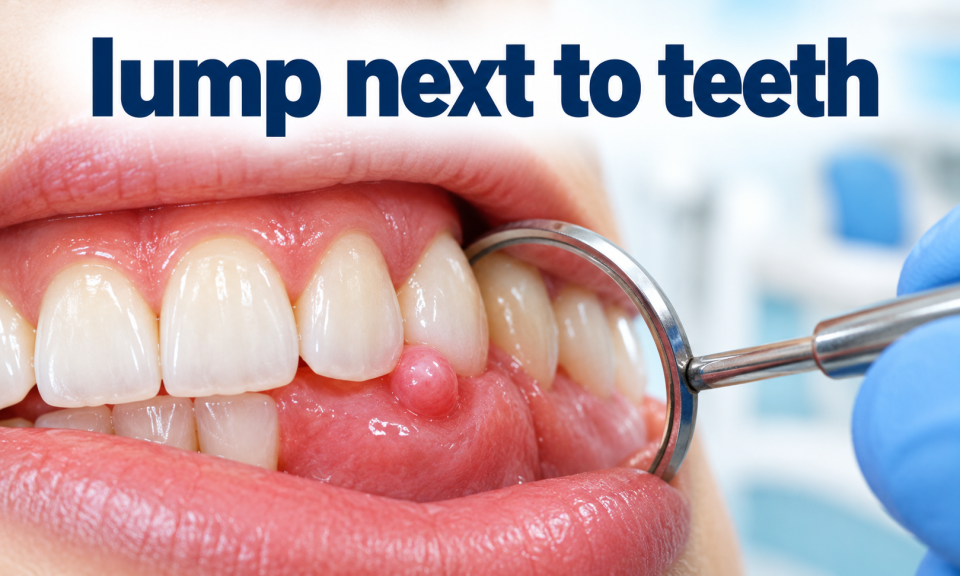
A lump next to teeth can develop for several reasons, ranging from a harmless irritation bump to an infection that needs prompt dental treatment. The location, texture, color, pain level, and how long the lump has been present can all provide useful clues, but a dentist may need to examine the area and take dental X-rays to identify the cause.
Many gum bumps are not emergencies, but a painful or pus-filled lump can be a sign of an abscess. Healthline’s guide to bumps on the gums lists dental cysts, abscesses, canker sores, fibromas, pyogenic granulomas, bony growths, and oral cancer among possible causes. Persistent, enlarging, bleeding, or unexplained lumps deserve professional evaluation.
What Can Cause a Lump Next to a Tooth?
The most likely cause depends on whether the bump is soft or hard, painful or painless, and whether it is associated with tooth decay, gum disease, recent dental work, or repeated irritation.
| Possible Cause | Typical Feel or Appearance | Common Clues | Usual Next Step |
| Dental or gum abscess | Tender, swollen, pimple-like bump; may drain pus | Throbbing toothache, bad taste, sensitivity, facial or gum swelling | Prompt dental treatment |
| Dental cyst | Often smooth and slow-growing; may be painless | May form near a tooth root or an unerupted tooth | Dental exam and imaging |
| Irritation fibroma | Firm, smooth, usually painless lump | Often develops where tissue is repeatedly rubbed or bitten | Remove the source of irritation; dental review if persistent |
| Canker sore | Shallow white or yellow sore with a red border | Painful with eating or brushing; usually heals within 1 to 2 weeks | Symptom relief and observation |
| Pyogenic granuloma | Soft red or purple bump that may bleed easily | May follow irritation; can occur during pregnancy | Dental evaluation; sometimes removal |
| Bony growth or torus | Very hard, smooth, fixed bump | Usually painless and changes slowly | Often observation unless it causes problems |
| Oral cancer or precancerous change | Persistent lump, thickening, red/white patch, or ulcer | May not hurt early; can bleed or fail to heal | Prompt dentist or physician evaluation |
Could the Lump Be a Dental Abscess?
A dental abscess is one of the most important possibilities to rule out because infection can spread if it is not treated. An abscess may develop at the root of an infected tooth, in the gum tissue, or in the supporting tissues around a tooth. It can look like a red or whitish pimple on the gum and may release pus or a bad-tasting fluid.
According to Cleveland Clinic’s dental abscess guidance, warning signs can include severe tooth pain, gum redness and swelling, a bad taste, swollen lymph nodes, jaw swelling, and a draining sore on the gum. An abscess does not reliably go away just because the pain improves.
What Is the Difference Between a Gum Abscess and a Tooth-Root Abscess?
A gum or periodontal abscess starts in the tissues supporting the tooth, often in association with gum disease or a deep periodontal pocket. A periapical abscess begins inside the tooth, usually after decay, a crack, or trauma allows bacteria to infect the dental pulp and spread toward the root tip.
Both can create a bump next to a tooth, and both usually require dental treatment. Depending on the source, treatment may involve drainage, deep periodontal cleaning, root canal treatment, tooth extraction, and sometimes antibiotics. Antibiotics alone do not always eliminate the source of a dental infection.
Can a Painless Lump Still Need Attention?
Yes. Pain is not a reliable way to judge whether a mouth lump is harmless. Dental cysts, fibromas, bony growths, and some early oral cancers may cause little or no pain. A new lump that remains for more than about two weeks, grows, changes color, bleeds, or repeatedly returns should be examined.
Could It Be a Canker Sore?
A canker sore can appear close to the gumline and may initially feel like a small bump. It usually develops into a shallow round or oval ulcer with a white, gray, or yellow center and a red rim. Canker sores can hurt when exposed to spicy, acidic, or crunchy foods but typically heal without treatment within one to two weeks.
Unlike an abscess, a canker sore is not a pus-filled pocket caused by a dental infection. If a sore repeatedly returns in the same place or does not heal, a dentist should check it.
What About a Hard Lump on the Gum?
A very hard, fixed bump can be a normal bony growth such as a torus or another benign enlargement of the jawbone. These usually grow slowly and are often discovered incidentally. However, a dentist should evaluate any new hard lump, especially if it causes pain, interferes with chewing, changes the fit of a dental appliance, or appears to be enlarging.
Can a Lump Next to Teeth Be Oral Cancer?
Most gum lumps are not cancer, but oral cancer is an important reason not to ignore a persistent change. A suspicious area may appear as a lump, thickened patch, nonhealing ulcer, red or white patch, or an area that bleeds easily.
Other warning signs can include unexplained loose teeth, difficulty chewing or swallowing, jaw pain or stiffness, numbness, or a persistent sore throat. Tobacco use and heavy alcohol use increase oral cancer risk, but oral cancer can occur in people without those risk factors.
What Should You Do at Home?
Home care can reduce irritation while you arrange dental care, but it cannot cure an abscess or diagnose a persistent growth. Keep the area clean with gentle brushing and flossing if comfortable. A warm saltwater rinse may temporarily soothe irritated gums. Avoid squeezing, puncturing, or trying to pop the lump because this can worsen tissue injury or spread infection.
For pain, over-the-counter pain relievers may be appropriate for many adults when used according to the label, but people with kidney disease, stomach ulcers, bleeding problems, medication interactions, pregnancy, or other medical conditions should check with a healthcare professional first.
When Is a Gum Lump an Emergency?
A localized gum bump usually starts with a dental appointment rather than an emergency-room visit. However, Cleveland Clinic’s periodontal abscess guidance advises urgent emergency evaluation when infection is accompanied by problems such as difficulty breathing or swallowing, fever, chills, nausea, or vomiting. Rapid facial or neck swelling is also concerning because dental infections can spread beyond the tooth and gums.
| Symptom or Finding | How Urgent? | Why It Matters |
| Small irritation bump that is improving | Monitor briefly | Minor trauma may settle once the irritation stops |
| Painful gum pimple, pus, bad taste, or toothache | Dentist promptly | May indicate a dental abscess |
| Lump lasting more than about two weeks | Dental evaluation | Persistent oral changes should be examined |
| Lump that grows, bleeds, or changes color | Prompt evaluation | Needs assessment for a persistent lesion or growth |
| Fever with facial or jaw swelling | Urgent care or emergency evaluation | May indicate spreading infection |
| Difficulty breathing or swallowing | Emergency care now | Can signal dangerous swelling or spread of infection |
How Will a Dentist Diagnose the Lump?
The dentist will examine the gums, teeth, bite, and surrounding tissues. They may tap on nearby teeth, check whether a tooth responds normally to temperature or vitality testing, measure gum pockets, or take an X-ray to look for infection, bone loss, a cyst, or changes near the tooth root.
If the lump does not have an obvious dental cause or has suspicious features, the dentist may refer you to an oral surgeon, periodontist, endodontist, or other specialist. A biopsy may be recommended for a persistent unexplained growth.
How Are Lumps Next to Teeth Treated?
Treatment depends entirely on the cause. An abscess may require drainage, root canal therapy, periodontal treatment, or extraction. A fibroma may improve after eliminating repeated irritation, though persistent lesions can be removed. Dental cysts sometimes need surgical treatment. Benign bony growths may need no treatment unless they interfere with oral function or dental appliances.
This is why identifying the cause matters more than simply treating the visible bump. A lump can shrink after draining while the infected tooth or gum pocket that caused it remains untreated.
Frequently Asked Questions
Why do I have a small bump on my gum next to a tooth?
Common possibilities include an abscess, irritation fibroma, cyst, canker sore, or bony growth. The exact cause depends on pain, texture, drainage, tooth condition, and how long the bump has been present.
Can a gum abscess go away on its own?
The bump may drain and temporarily become smaller, but the source of infection can remain. Dental abscesses generally require professional treatment.
Should I pop a lump on my gum?
No. Do not squeeze, puncture, or pop a gum lump. If it is an abscess, doing so does not remove the source and may spread bacteria or injure the tissue.
What does an abscess bump look like?
It may resemble a swollen pimple or boil on the gum. It can be red, tender, soft, or pus-filled and may be associated with tooth pain, sensitivity, a bad taste, or swelling.
Can a gum lump be painless?
Yes. Cysts, fibromas, bony growths, and some serious oral lesions may be painless. A persistent painless lump should still be examined.
How long should I wait before seeing a dentist?
A painful, draining, or infected-looking bump should be assessed promptly. Any unexplained lump that persists for about two weeks, grows, bleeds, or changes should also be checked.
Bottom Line
A lump next to a tooth is often caused by infection, irritation, a cyst, or another benign oral condition, but its appearance alone cannot confirm the diagnosis. Pain, pus, a bad taste, tooth sensitivity, or swelling raise concern for an abscess and warrant prompt dental care. Persistent, growing, bleeding, or unexplained lumps also need evaluation even when they do not hurt.
Seek emergency care if a dental or gum infection is accompanied by rapidly increasing facial or neck swelling, difficulty breathing or swallowing, or significant systemic illness.
