
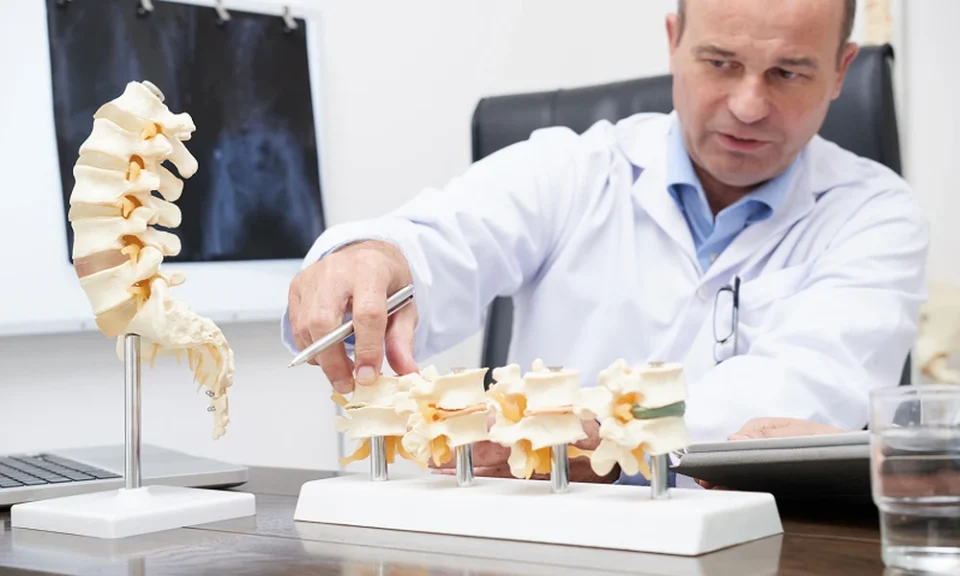
Key Highlights
- Lumbar replacement focuses on supporting the significant weight of the lower body.
- The surgical approach for the lower back often requires access through the abdomen.
- Recovery protocols for the lumbar spine emphasize core stability and gradual loading.
- Lumbar implants are larger and more robust than those used in the neck.
Introduction
Spinal surgery has evolved dramatically, moving away from rigid fusion toward motion-preserving techniques. For patients suffering from chronic lower back pain due to degenerative disc disease, lumbar disc replacement offers a way to find relief without sacrificing the flexibility of the lower spine. While the concept is similar to procedures performed on the neck, there are distinct differences when addressing the lumbar region. Understanding these nuances is essential for any patient considering disc replacement surgery. Because the lower back bears the majority of the body’s weight and facilitates complex movements like twisting and bending, the technology and surgical strategies used here are uniquely tailored to handle these specific physical demands.
1. Structural Requirements and Implant Design
One of the most immediate differences in lumbar disc replacement compared to other areas of the spine is the size and strength of the implant. The lumbar vertebrae are the largest in the spinal column because they must support the weight of the entire upper body. Consequently, the artificial discs used in this region are significantly more robust. These implants are engineered to handle high axial loads while still allowing for the flexion and extension necessary for walking and sitting. In contrast, other forms of disc replacement surgery, such as those for the cervical spine, use much smaller, more delicate devices focused primarily on maintaining the fine movements of the neck.
2. The Surgical Approach and Access
The way a surgeon reaches the spine varies depending on the location of the damaged disc. For a lumbar disc replacement, the most common method is the anterior approach, where the surgeon accesses the spine through the abdomen. This allows the specialist to reach the discs without disturbing the major nerves and muscles of the back. This differs significantly from many other types of disc replacement surgery, which might involve a side or posterior approach. The abdominal access requires careful navigation around internal organs and major blood vessels, necessitating a highly skilled surgical team to ensure the procedure is performed safely and effectively.
3. Weight-Bearing and Mechanical Stress
The lower back is subject to much higher levels of mechanical stress than the upper spine. Every time you lift an object or stand up from a chair, your lumbar discs are put under pressure. Because of this, the criteria for choosing candidates for lumbar replacement are often more stringent. Surgeons must ensure that the patient’s bone quality is high enough to support the metal plates of the artificial disc. While any disc replacement surgery aims to restore function, the lumbar procedure is particularly focused on long-term stability under the constant pressure of daily weight-bearing activities, making the precision of the implant’s placement even more critical.
4. Rehabilitation and Recovery Focus
The recovery process after surgery on the lower back is unique because the lumbar spine is the centre of the body’s movement. Post-operative rehabilitation for a lumbar disc replacement focuses heavily on rebuilding core strength and improving posture to support the new artificial joint. Patients are often encouraged to start walking shortly after surgery, but they must avoid heavy lifting or high-impact activities for a longer period compared to neck surgery patients. This gradual reintroduction of physical stress is necessary to allow the bone to grow into the implant’s surfaces, ensuring a permanent and secure bond that will last for years.
Conclusion
Lumbar disc replacement represents a significant technological leap in treating chronic lower back pain. While it shares the same goal as other motion-preserving surgeries, the unique anatomy and weight-bearing requirements of the lower back necessitate a specialised approach. From the design of the implant to the way the surgery is performed, every step is tailored to the specific needs of the lumbar spine. For the right candidate, this procedure can provide a life-changing reduction in pain and a return to an active lifestyle. Consulting with a spinal expert will help you understand if this advanced form of disc replacement surgery is the most appropriate path for your recovery.
Contact Achieve Spine & Orthopaedic Centre today to discuss your treatment options.