
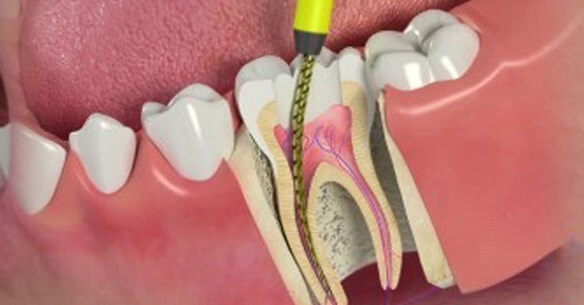
One of the best orders for restoring a tooth that has experienced severe decay or contamination is a root canal analysis. Root canals typically have a success rate of more than 90%. Like some medical procedures, they can, however, periodically fail by way of infection complications or insufficient healing.
Rest assured that there are still options applicable if your root canal doesn’t offer enduring relief. You can prevent extraction by continuing your tooth with endodontic retreatment or minor resection.
Why can’t a Root Canal always Work?
Numerous factors, commonly resulting from elaborate anatomy or unexpected problems, can cause root canal treatment to fail. Typical reasons involve:
• Missed canals:
During the initial process, it may be troublesome to identify dentition with extra or bent canals.
• Inadequate cleaning or sealing:
The contamination may persist if bacteria are borne or re-enter the canal.
• Delayed crown placement:
Bacteria can re-enter the point if restoration is deferred for an extended period.
• Dental cracks:
Even following a successful root canal, a tooth crack may permit the spread of contamination.
• New trauma or decay:
If the treated tooth experiences new damage, the initial work can be jeopardized.
Indications That Your Root Canal Didn’t Work.
The following are a few signs of a failed root canal.
- Constant or recurring pain. Gum swelling or irritation.
- Sensitivity to temperature or pressure.
- A bump or pimple on the gum line.
- A discolored or darkened tooth after a situation.
Consult an endodontist for an assessment if you’re presenting any of these manifestations.
Option 1: Re-treating a root canal without surgery.
What It Involves:
To remove the traditional filling material, your endodontist will retreat the denticle. Before resealing, the canals undergo perfectionist cleaning, change, and disinfection. After that, a new restoration—such as a crown—is introduced.
In what situations is it considered?
- If not all of the canals were completely uncluttered or sealed all along during the first procedure.
- If there is new contamination or decay.
- If the earlier procedure used antiquated means and was performed years ago.
Option 2: Endodontic surgery or apicoectomy.
What It Contains:
If retreatment has failed or is not doable, your dentist might recommend an apicoectomy. In this minor surgical procedure, the tooth’s root tip and any encircling infected tissue are removed. The end is subsequently secured.
In situations where it is advised:
- If the tooth has a fixed post or an obstructed canal.
- If retreatment has once failed.
- If the root tip has an infection or a continuous cyst.
Conclusion
A tooth is not hopeless if your root canal fails. By communicable action, inappropriate, you can improve your chances of consistency your natural tooth and avoiding future more involved processes.
